Apr
23
2026
18:09

Apr
23
2026
18:09
If things don't change they stay the same
Matthew reflects on the constant tension between the need to innovate versus sticking by principles that make us who we are.
Before I started farming (in the early 1980's) I worked in an office job in London. My boss was a lovely woman, whose favourite expression was, "if things don't change they stay the same".
I couldn't get out of there faster - but logic would have it that she was right. However, things never do not change - it wouldn't be healthy if change did not happen.
At Zsámboki Biokert things are changing and staying the same - well sort of. Over the last years we have spent a lot of time thinking about how to adapt and evolve and yet maintain the things that work well for us. We have some core values which we want to hang on to:
- only ecologically sustainable and regenrative farming practices
- be a fair employer
- be partners with our customers - try to listen to them and understand their needs
- be part of our local community
- enjoy what we do and stay healthy
How we exactly maintain these values will change over time. The world changes, and we have to adapt to stay relevant, however we don't want to sell out on any of our core values, as these are what keep us sane, healthy and maintain culture (agriculture and human culture).
So what is going on?
Zsámboki Biokert is not quite a family business, nor is it a workers cooperative - it is a kind of mission-based commercial social enterprise. Our leading values are based around environmental and social good. For us the economics of the business is a means to an end. Some people call these kind of businesses "triple bottom line" (environmental, social and economic - the three "pillars" of sustainability). I like the term social enterprise, as we need conscience-driven enterprise to meet the demands of today whilst taking a long-term view.
Recently, we have slightly formalised our leadership structure. At a management level we have two highly talented, highly competent young managers: Petro Csaba, the farm manager (who has taken over the day-to-day management from me, Matthew) and Kristóf Hayes, our new commercial manager. Csaba's role is to make the farm work as efficiently and productively as possible, Kristóf role is to see how we can grow the business, the sales, to acheive a level of financial security which provides the overall organisation with stablity.
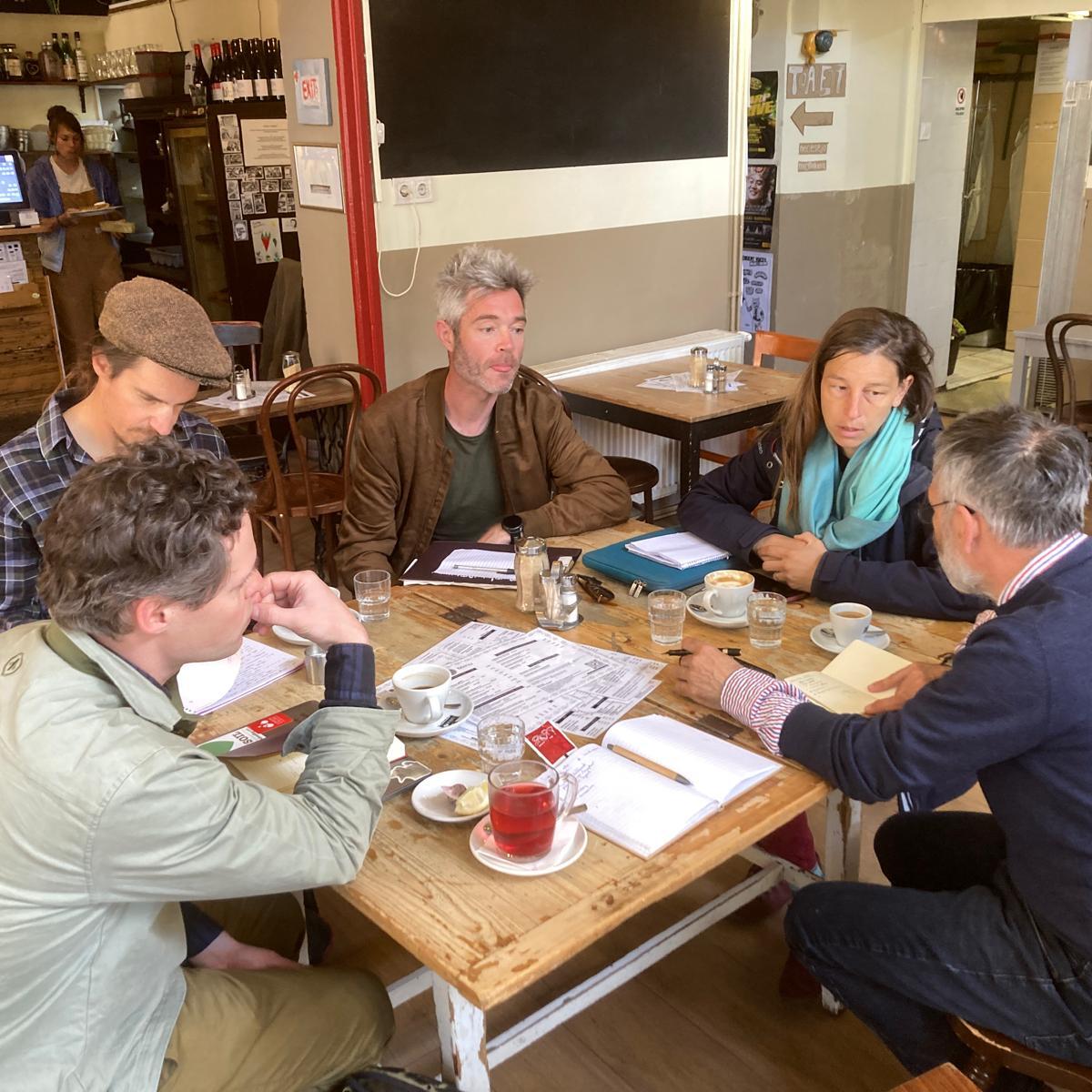
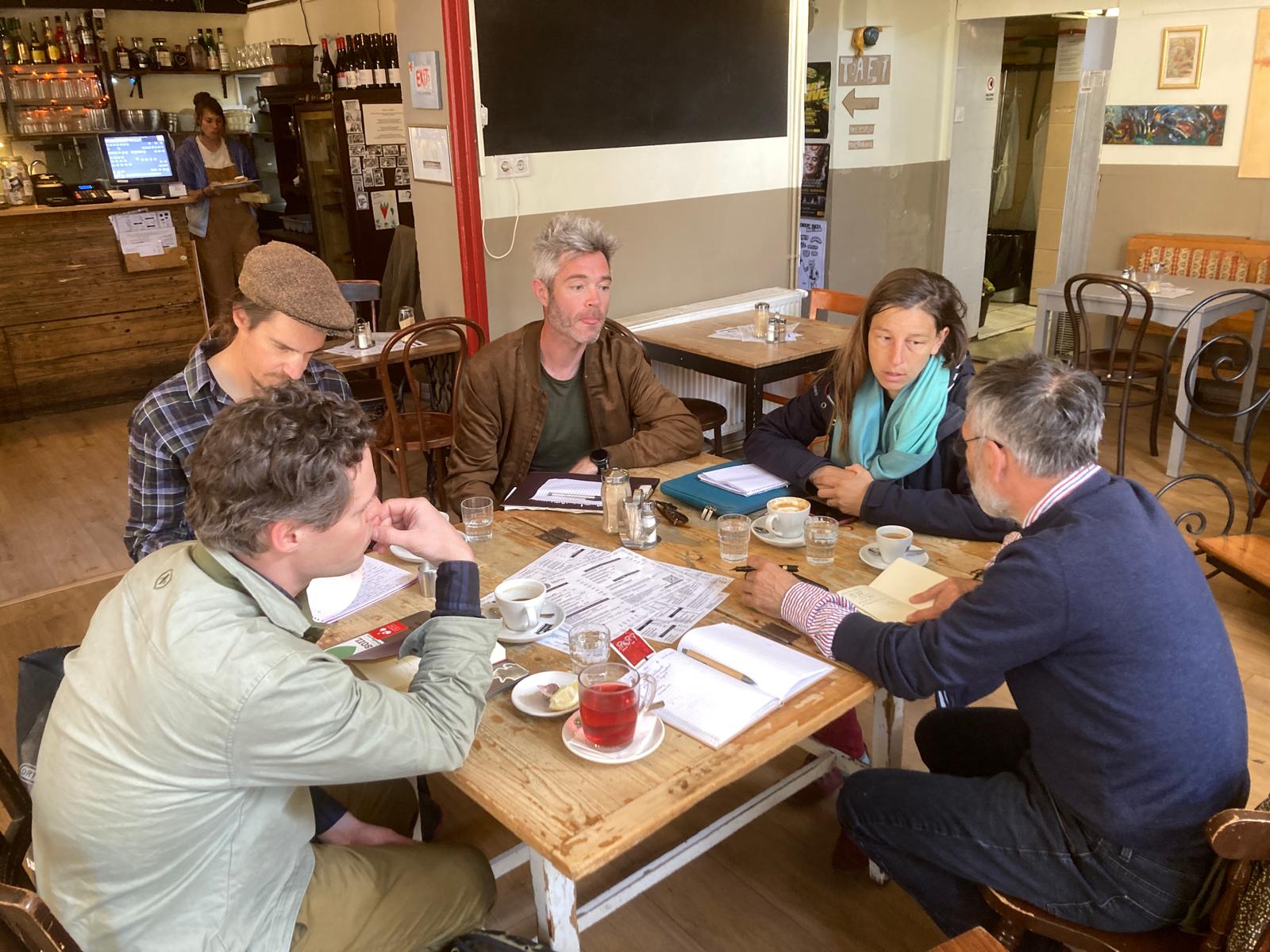
At the longer-term strategy level we have established our governance group. This is made up of the owners of Zsámboki Biokert (Kata, Logan, Gregoire, James, Matthew) and Kristóf as commercial manager. We now meet once a month, and look for a balance between the needs of the moment with the long-view, and how to keep true to our core values.
And meanwhile we keep focused on the day-to-day stuff. Kristóf and Csaba report regularly on what is going on in the bio-intensive garden. Matthew gives a short report here on what is going on "at the back" in the field vegetable production areas:
Last year we made a conscious decision to increase our production of storable vegetables for the winter period. To do this efficiently requires a level of mechanisation, otherwise the labour demands are just too high, and would push the price of winter vegetables beyond the purse of our customers. I have gladly taken on the challenge of growing more bulk amounts of vegetable using machinery. I find this kind of amusing, as for most of my working life I have been focused (and promoted) hand-work, that is growing lots of veggies with simple hand tools. I have got to the time in life when a bit of a change is welcome, and getting my head and hands around managing machinery certainly provide that. We have accumulated now a reasonable collection of mostly old, with the occasional new bit of kit, to allow for some field veg production.
We are not talking here about big areas, but certainly larger than one or two people can handle without the benefit of some machinery and equipment. Last year we started with around 0,5 hectare of production, this year we are up to about 1,0 ha. This might not sound much, until you look at the area (come along to the open day - May 16th) and see for yourself. Most people think that the biggest challenge of growing organically is pests and diseases - wrong!
Most organic growers would agree that the biggest challenge is keeing on top of weeds. Right now, this is very much the case. We have had a cool winter, which means the soil is slow to warm up, which means that crop germination is slow. One thing about weeds is that they are very well adapted to their environment - that means they know how to get going, come rain, come shine, come cool, come hot, come hell and high water! So, especially at this time of year, when we are most concerned about germination, and keeping those slow to germinate crops (e.g. carrots and onions) clean and untroubled. My default as a hands-on gardener is to combine a good amount of hand hoeing together with tractor cultivation when conditions allow.
All this talk about weeds is not to say that pests and diseases are not an issue for the organic farmer - but that is another story for another time.